
Element 2.2 – Mobilise construction plant, equipment, and tools based on the contract document
INTRODUCTION
To mobilise construction plant equipment sanitation projects correctly is the final step before work begins. You have cleared the site. You have identified your human resources. Now you need machines and tools. Without them, your team cannot work.
Many contractors arrive on site with nothing. They expect to hire equipment locally. This causes delays. The excavator is not available. The concrete mixer is broken. The levelling tools are missing.
This blog post covers Element 2.2 of onsite sanitation training. You will learn how to mobilise construction plant equipment sanitation according to the contract document. By the end, you will know exactly what machines and tools to bring, and how to bring them.
✅ Internal link: Before mobilising equipment, you must first learn to identify human resources onsite sanitation.
PART ONE: WHY YOU MUST MOBILISE CONSTRUCTION PLANT EQUIPMENT SANITATION
Many contractors underestimate the importance of proper mobilisation. They assume equipment will be available when needed. This is a dangerous assumption.
First, without proper plant, work stops. A missing excavator means no excavation. A broken concrete mixer means no concrete. Delays cascade.
Second, incorrect equipment damages the site. A large excavator in a small backyard destroys landscaping. A heavy roller compactor cracks nearby foundations.
Third, contracts specify mobilisation requirements. If you ignore them, you breach the contract. The client may reject your equipment and demand replacements.
Therefore, learning to mobilise construction plant equipment sanitation protects your schedule and your contract.
For equipment safety standards, refer to Kenya Bureau of Standards (KEBS) Equipment Guidelines
PART TWO: HEAVY PLANT AND EQUIPMENT
When you mobilise construction plant equipment sanitation, heavy plant comes first. These machines do the big work.
2.1 Excavator
The excavator digs the tank pit and pipe trenches. It is the most important machine for earthworks.
Specifications needed:
- Size: 3–5 tonne for small sites; 10–15 tonne for large sites
- Bucket: 0.3–0.5 cubic metres for general excavation
- Rubber tracks for finished surfaces; steel tracks for rough ground
Mobilisation checklist:
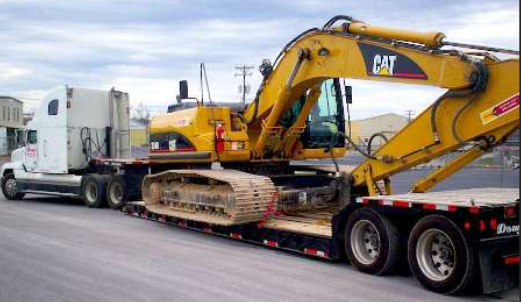
- Excavator delivered by lowbed trailer
- Operator provided (or trained)
- Service records available
- Fuel and lubricants on site
2.2 Backhoe
A backhoe is a tractor with an excavator arm on the back and a loader bucket on the front. It is useful for smaller sites where a full excavator cannot fit.
Advantages: One machine does two jobs (digging and loading).
Disadvantages: Slower than a dedicated excavator.
2.3 Tipper Trucks
Tipper trucks remove excavated soil and bring in backfill materials.
Quantity needed: 1–2 trucks depending on soil volume.
Important: Ensure the tipper can access the site. Some residential areas have narrow gates or low bridges.
2.4 Concrete Mixer
The concrete mixer produces concrete on site. For small projects, a portable mixer (1–2 bag capacity) is sufficient. For larger projects, a volumetric mixer delivers ready-mixed concrete.
Options:
- Portable mixer (electric or diesel): Good for small tanks. Requires labour to load.
- Volumetric mixer truck: Delivers exactly the amount needed. Reduces waste.
2.5 Vibrator (Needle Vibrator)
A needle vibrator removes air bubbles from wet concrete. Without vibration, concrete has honeycombing and weak spots.
Why this matters: A tank wall with honeycombing leaks sewage. A cover slab with air pockets cracks under load.
2.6 Compactor (Plate or Roller)
The compactor compresses backfill soil. Proper compaction prevents settlement.
Types:
- Plate compactor (vibrating plate): For trenches and small areas
- Roller (vibratory or smooth drum): For large areas and access roads
Compaction requirement: Backfill must achieve 95% of maximum dry density (per BS 8005).
2.7 Water Bowser
The water bowser supplies water for concrete mixing, curing, and dust suppression.
Capacity: 1,000–5,000 litres depending on site size.
Important: In areas without piped water, the bowser must be filled off-site and brought in daily.
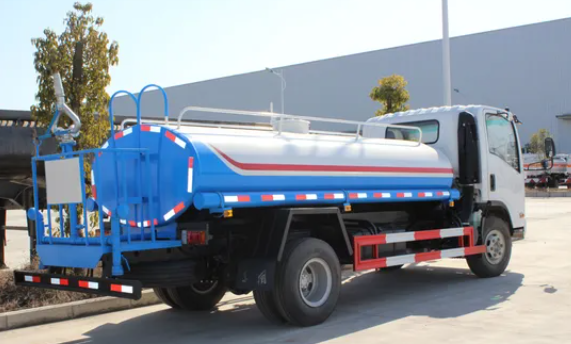
Plate compactor and water bowser delivered to mobilise construction plant equipment sanitation for backfilling and curing
PART THREE: HAND TOOLS
Heavy plant does the big work. Hand tools do the detailed work. When you mobilise construction plant equipment sanitation, do not forget the small tools.
3.1 Measuring and Levelling Tools
| Tool | Purpose |
| Tape measure (30m or 50m) | Measure distances and dimensions |
| Spirit level (1m and 2m) | Check horizontal and vertical alignment |
| Dumpy level | Measure gradients and invert levels |
| Laser level | Fast, accurate levelling over distance |
| Gradient rod | Measure depth below reference line |
3.2 Pipe Tools
| Tool | Purpose |
| Pipe cutter (plastic) | Cut uPVC pipes cleanly and squarely |
| Hack saw | Cut pipes and reinforcement bars |
| Pipe wrench | Tighten fittings |
| Solvent cement applicator | Apply glue to uPVC joints |
| Deburring tool | Remove sharp edges after cutting |
3.3 Concrete and Reinforcement Tools
| Tool | Purpose |
| Shovels (round and square) | Mixing and placing concrete |
| Wheelbarrows | Transport concrete and materials |
| Rebar cutter | Cut steel bars |
| Rebar bender (manual or electric) | Bend bars to required angles |
| Tying wire and pliers | Secure rebar intersections |
| Concrete float and trowel | Finish concrete surfaces |
3.4 General Construction Tools
| Tool | Purpose |
| Hammers (claw and sledge) | Driving nails and breaking small items |
| Crowbar | Leverage and demolition |
| Pickaxe | Breaking hard ground |
| String line | Setting out straight lines |
| Spray paint | Marking ground |
| Safety cones | Marking hazards |
For tool calibration standards, refer to ISO 9001 Measurement Equipment Requirements (external link).
PART FOUR: MOBILISATION PROCESS
Mobilisation is not just bringing equipment. It is a process. Follow these steps when you mobilise construction plant equipment sanitation.
4.1 Step 1: Contact Suppliers
Before mobilisation begins, contact all equipment suppliers. Confirm availability, price, and delivery date.
Information to provide:
- Site address and access instructions
- Required delivery date and time
- Equipment specifications (size, type, attachments)
- Rental duration (days or weeks)
- Insurance requirements
Lead times to expect:
- Excavator: 1–3 days notice
- Concrete mixer: Same day to 2 days
- Tipper trucks: 1 day notice
- Hand tools: Same day from hardware store
4.2 Step 2: Transport to Site
Arrange transport for each piece of equipment.
For heavy plant: Use lowbed trailers. Ensure the trailer can access the site. Check for overhead wires, low bridges, and narrow gates.
For tools: Use pick-up trucks or vans. Keep tools organised in toolboxes. Do not throw them loose in a vehicle.
4.3 Step 3: Inspect Upon Arrival
Inspect every piece of equipment when it arrives. Do not accept damaged or non-functional equipment.
Inspection checklist:
- No visible damage (cracks, leaks, bent parts)
- All controls work
- Safety features functional (lights, horn, seatbelt)
- Service records available (for heavy plant)
- Fuel and fluid levels adequate
For hand tools:
- No cracks in handles
- Cutting edges sharp
- Measuring tools accurate (check against a known standard)
4.4 Step 4: Store Safely
Store equipment and tools safely when not in use.
Heavy plant: Park on level, firm ground. Apply handbrakes. Remove keys when unattended. Lock in a fenced area overnight.
Hand tools: Store in lockable toolboxes or containers. Do not leave tools on the ground overnight. They will rust or be stolen.
Consumables: Store fuel, lubricants, and solvents in approved containers. Keep away from heat sources. Provide spill containment.
PART FIVE: CONTRACT DOCUMENT REQUIREMENTS
The contract document specifies exactly what plant, equipment, and tools you must provide. When you mobilise construction plant equipment sanitation, read this section carefully.
5.1 What the Contract May Specify
| Contract Requirement | Example |
| Minimum plant list | “Contractor shall provide one excavator (minimum 5 tonne)” |
| Brand or model | “Concrete mixer must be Cemco or equivalent approved” |
| Age restrictions | “All heavy plant shall be less than 5 years old” |
| Maintenance records | “Service records for the previous 6 months must be available” |
| Operator requirements | “Excavator operator must have valid licence and 3 years experience” |
| Fuel supply | “Contractor to provide all fuel. Client will not supply.” |
| Spare parts | “Contractor to maintain a stock of common spare parts on site” |
5.2 Sample Plant and Equipment Schedule
| Equipment | Quantity | Start Day | End Day | Supplier |
| Excavator (5t) | 1 | Day 1 | Day 5 | Heavy Machines Ltd |
| Tipper truck | 1 | Day 1 | Day 4 | Transport Services Co |
| Concrete mixer (portable) | 2 | Day 3 | Day 15 | Owned |
| Needle vibrator | 2 | Day 4 | Day 16 | Owned |
| Plate compactor | 1 | Day 10 | Day 12 | Tool Hire Kenya |
| Water bowser (2000L) | 1 | Day 1 | Day 20 | Owned |
| Dumpy level | 1 | Day 0 | Day 25 | Owned |
| Laser level | 1 | Day 0 | Day 25 | Owned |
| Hand tool set (complete) | 2 | Day 0 | Day 25 | Owned |
PART SIX: MOBILISATION CHECKLIST
Use this checklist when you mobilise construction plant equipment sanitation:
Heavy Plant Checklist
- Excavator ordered and confirmed
- Tipper trucks arranged
- Concrete mixer delivered
- Needle vibrator on site
- Compactor (plate or roller) arranged
- Water bowser filled and ready
Hand Tools Checklist
- Tape measures (30m and 5m)
- Spirit levels (1m and 2m)
- Dumpy level and staff
- Laser level (if available)
- Pipe cutters and hacksaws
- Pipe wrenches
- Rebar cutter and bender
- Shovels, wheelbarrows, hammers
- String line and spray paint
Mobilisation Process Checklist
- Suppliers contacted and confirmed
- Transport arranged
- Equipment inspected upon arrival
- Damaged items rejected or replaced
- Heavy plant parked securely
- Hand tools stored in lockable containers
- Fuel and consumables on site
- Insurance documents available
PART SEVEN: LEARNING OUTCOME CHECK
After learning to mobilise construction plant equipment sanitation, you should be able to:
| # | Learning Outcome |
| I | List all heavy plant required for onsite sanitation construction |
| II | Identify all hand tools needed for daily work |
| III | Describe the mobilisation process (contact, transport, inspect, store) |
| IV | Read a contract document to extract plant and equipment requirements |
| V | Inspect equipment upon arrival and reject damaged items |
| VI | Store tools and plant safely to prevent theft and damage |
| VII | Create a mobilisation schedule matching the project timeline |
CONCLUSION
Learning to mobilise construction plant equipment sanitation is the final preparation step. Without proper plant, your team cannot work. Without proper tools, skilled workers become ineffective. Without proper mobilisation, the contract is breached.
The contractor who arrives with broken equipment fails. The contractor who forgets essential tools stops work. The contractor who inspects nothing pays for damaged machines.
Therefore, contact suppliers. Transport carefully. Inspect everything. Store securely. Then build.