
Dismantling scaffolds is one of the most hazardous operations on any construction site. This guide explains the safety tips and procedures for dismantling scaffolds, helping building technicians remove scaffolding without injury, damage, or delay.
Introduction: Why Safe Scaffold Dismantling Matters
Dismantling scaffolds removes the very structure that protects workers at height. Moreover, the scaffold weakens with every component removed. Consequently, a careless dismantling sequence can cause collapse, falls, and falling objects.
In addition, dismantling often receives less attention than erection. As a result, workers rush the task and skip safety measures. Therefore, technicians must plan dismantling with the same care as erection.
This guide therefore covers the full dismantling process, from planning and preparation to the final inspection and handover.
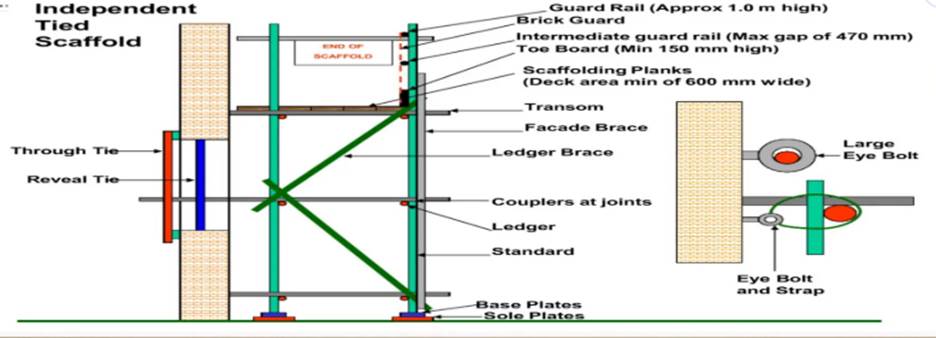
Planning Before Dismantling
Safe dismantling begins long before the first coupler is loosened. In fact, planning prevents most accidents during removal.
Step 1: Confirm the Dismantling Is Authorised
First, confirm that the site supervisor has authorised the dismantling. Moreover, verify that all work on the scaffold is complete and that no trades still need access.
In addition, check that the structure no longer requires the scaffold for support or protection. Consequently, no one removes a scaffold that is still in use.
Step 2: Review the Erection Design and Sequence
Next, review the original erection design. The dismantling sequence is normally the reverse of erection. Therefore, understand how the scaffold was built before taking it apart.
Pay particular attention to:
- Tie positions and spacing.
- Brace positions and types.
- Lift heights and platform levels.
- Any special supports or cantilevers.
Step 3: Inspect the Scaffold Before Dismantling
Then, inspect the scaffold in its current condition. Look for damage, corrosion, missing components, and loose couplers. Moreover, check for unauthorised alterations made after erection.
If the scaffold has been altered, assess the changes before dismantling. Consequently, you avoid unexpected movement during removal.
Step 4: Assess Hazards and Plan Controls
Next, carry out a risk assessment for the dismantling operation. Identify hazards such as falls, falling objects, manual handling, and public access.
Moreover, plan control measures for each hazard. For instance, provide exclusion zones, netting, and warning signs. In addition, plan for adverse weather, especially high winds.
Step 5: Select Competent Personnel
Dismantling must be carried out by competent people under competent supervision. Therefore, confirm that workers hold the required training and certification.
In addition, brief the team on the sequence, hazards, and emergency arrangements before work begins.
Step 6: Prepare Tools, Materials, and PPE
Next, gather all tools and PPE. Inspect each item and reject anything damaged. Moreover, provide containers or racks for lowering components safely.
Provide PPE including helmets, safety boots, gloves, goggles, high-visibility vests, and fall protection harnesses.
Safety Tips for Dismantling Scaffolds
Safety tips keep the operation controlled and predictable. Therefore, apply the following throughout the task.
Tip 1: Dismantle from the Top Downward
Always remove components from the top downward. Consequently, the scaffold remains stable as it reduces in height.
Never remove lower components first, because this undermines the sections above.
Tip 2: Keep Ties and Braces in Place as Long as Possible
Ties and braces stabilise the scaffold. Therefore, remove them only when the sections they support are ready for removal.
In addition, never remove all ties at once. Instead, remove them progressively as the scaffold comes down.
Tip 3: Maintain Fall Protection at All Times
Workers at height need fall protection throughout dismantling. Therefore, use harnesses attached to a secure anchor point.
Moreover, keep guard rails in place on the working lift until that lift is removed. Consequently, workers remain protected as they work.
Tip 4: Control Falling Objects
Falling components endanger workers below. Therefore, lower components with ropes or gin wheels. Never throw components to the ground.
In addition, install netting or fans where required. Moreover, maintain an exclusion zone beneath the scaffold at all times.
Tip 5: Never Overload the Remaining Scaffold
As the scaffold comes down, its capacity reduces. Therefore, never stockpile components on the remaining lifts. Instead, lower them promptly.
Tip 6: Work in a Planned Sequence
Follow the reverse erection sequence exactly. Consequently, each component is removed only after the components it supports have gone.
Tip 7: Watch the Weather
High winds make dismantling dangerous. Therefore, stop work when winds exceed safe limits. In addition, avoid dismantling during lightning, heavy rain, or poor visibility.
Tip 8: Maintain Clear Communication
Use clear signals when lowering components. Moreover, keep the team in sight of one another where possible. Consequently, everyone knows what is happening.
Tip 9: Secure the Site
Prevent unauthorised access to the dismantling area. Therefore, use barriers, signs, and, where necessary, a banksman.
Tip 10: Stop If Conditions Change
If the scaffold moves, if ties fail, or if the weather worsens, stop work immediately. Then, reassess before continuing.
Step-by-Step Dismantling Procedure
The following procedure applies to most supported scaffolds. However, always follow the manufacturer’s instructions and the site-specific method statement.
Step 11: Clear the Platform
First, remove all tools, materials, and debris from the platform. Consequently, nothing falls during dismantling, and the platform is clear for workers.
Step 12: Remove Toe Boards and Guard Rails
Next, remove toe boards and guard rails from the top lift. However, keep fall protection in place for the workers.
Step 13: Remove Platform Boards
Then, remove the platform boards. Pass them down by hand or lower them with a rope. Moreover, stack them neatly at ground level.
Step 14: Remove Transoms and Ledgers
Next, loosen and remove transoms and ledgers from the top lift. Work from one end to the other. Consequently, the standards remain braced until the lift is clear.
Step 15: Remove Diagonal Braces
Then, remove diagonal braces from the lift being dismantled. However, leave braces in the lift below until that lift is next.
Step 16: Remove Ties Progressively
Next, remove ties from the lift being dismantled. Moreover, never remove ties from lower lifts at this stage.
Step 17: Remove Standards
Then, remove the standards for the lift being dismantled. Lower them carefully to the ground. Consequently, the scaffold reduces in height by one lift.
Step 18: Repeat for Each Lift
Repeat the sequence for each lift below. Consequently, the scaffold comes down progressively and safely.
Step 19: Remove Base Plates and Sole Boards
Finally, remove the base plates and sole boards. Then, clear the ground and inspect the area for damage.
Step 20: Inspect, Sort, and Store Components
Next, inspect each component for damage. Separate sound components from defective ones. Moreover, clean and store them correctly for the next project.
Dismantling Different Scaffold Types
Different scaffold types need slightly different approaches. Therefore, technicians must follow the method suited to the system.
Frame Scaffold Dismantling
Remove platform boards first, then cross-bracing, then frames. Consequently, frames come down in manageable units.
Tube and Clamp Scaffold Dismantling
Loosen couplers progressively. Moreover, keep ledgers and braces in place until the standards above them are removed.
System Scaffold Dismantling
Follow the manufacturer’s sequence exactly. In addition, never mix components from different systems during removal.
Mobile Tower Dismantling
Dismantle towers in the reverse of the erection sequence. Moreover, lock the castors before climbing. Then, remove outriggers last.
Suspended Scaffold Dismantling
Lower suspended scaffolds to ground level before dismantling. Moreover, never release the suspension ropes while workers remain on the platform.
Common Hazards During Dismantling
Dismantling involves several hazards. Therefore, technicians must recognise and control them.
- Falls from height – use fall protection and keep guard rails in place.
- Falling objects – lower components, use netting, and maintain exclusion zones.
- Premature collapse – follow the reverse erection sequence and keep ties.
- Manual handling injuries – use lifting aids and team lifts.
- Struck-by vehicles – secure the site and use a banksman.
- Adverse weather – stop work in high winds, lightning, or heavy rain.
- Public access – fence the area and post warning signs.
Common Mistakes to Avoid
Many dismantling accidents result from avoidable errors. Therefore, avoid the following common mistakes.
- Removing ties or braces too early.
- Dismantling from the bottom upward.
- Throwing components to the ground.
- Stockpiling components on the remaining lifts.
- Removing guard rails before fall protection is in place.
- Working in high winds or poor visibility.
- Allowing untrained workers to dismantle scaffolds.
- Leaving the site open to public access.
- Skipping the inspection after dismantling.
- Storing damaged components with sound ones.
Inspection and Handover After Dismantling
Dismantling ends with inspection and handover. Therefore, follow these requirements.
First, inspect the ground and the structure for damage. Then, confirm that all components are removed and accounted for. Moreover, inspect each component and record its condition.
In addition, clean components before storage. Consequently, they remain ready for the next project. Finally, complete the scaffold register and close the record.
Step-by-Step Summary Table
| Stage | Step | Key Point |
| Planning | Confirm authorisation | No trades still need the scaffold |
| Planning | Review design | Dismantle in reverse sequence |
| Planning | Inspect scaffold | Check for damage and alterations |
| Planning | Assess hazards | Falls, objects, weather |
| Planning | Select personnel | Trained and competent |
| Planning | Prepare tools and PPE | Inspect and reject defects |
| Safety | Dismantle top-down | Keep the scaffold stable |
| Safety | Keep ties and braces | Remove progressively |
| Safety | Maintain fall protection | Keep guard rails until removal |
| Safety | Control falling objects | Lower, never throw |
| Safety | Watch the weather | Stop in high winds |
| Procedure | Clear platform | Remove tools and debris |
| Procedure | Remove toe boards and rails | Keep fall protection |
| Procedure | Remove platform boards | Lower by rope |
| Procedure | Remove transoms and ledgers | Work end to end |
| Procedure | Remove braces | Leave lower braces |
| Procedure | Remove ties | Progressively |
| Procedure | Remove standards | Lower carefully |
| Procedure | Repeat lifts | Reverse erection sequence |
| Procedure | Remove base and sole boards | Clear the ground |
| Handover | Inspect and store | Sort sound from defective |
Conclusion
Dismantling scaffolds safely depends on planning, sequence, and discipline. When technicians review the design, maintain ties and braces, and work from the top downward, they remove the scaffold without incident.
Moreover, safety tips such as lowering components, controlling access, and watching the weather prevent the accidents that make dismantling so dangerous. Therefore, never rush the task, and never remove a component before the ones above it are gone. As a result, the site stays safe, and the components remain ready for reuse.
Frequently Asked Questions
In what order should a scaffold be dismantled?
Dismantle from the top downward, following the reverse of the erection sequence. Remove platform boards, transoms, ledgers, braces, ties, and standards lift by lift.
Why must ties and braces stay in place during dismantling?
Ties and braces stabilise the scaffold. Therefore, remove them only when the sections they support are ready for removal. Removing them too early causes collapse.
How should scaffold components be lowered?
Lower components with ropes, gin wheels, or chain blocks. Never throw components to the ground, because they endanger workers below.
Can a scaffold be dismantled in high winds?
No. Stop dismantling when winds exceed safe limits. High winds make components difficult to control and increase the risk of collapse.
What happens to components after dismantling?
Inspect each component, separate sound from defective ones, clean them, and store them correctly. Consequently, they remain ready for the next project.