
Scaffold materials determine how strong, safe, and economical a scaffold will be. This guide explains the materials used in scaffolding, what each one offers, and why technicians choose one material over another for a given task.
Introduction: Why Scaffold Materials Matter
Scaffold materials carry the weight of workers, tools, and materials at height. Moreover, they resist wind, impact, and repeated handling. Consequently, the choice of material directly affects safety and cost.
In addition, different materials suit different scaffolds and site conditions. For instance, steel suits heavy-duty work, while aluminium suits mobile towers. Therefore, technicians must understand the properties of each material before selecting it.
This guide therefore covers the main scaffold materials, their uses, advantages, and limitations.
What Makes a Good Scaffold Material?
A good scaffold material must meet several requirements. Therefore, technicians should check each one before selecting a material.
- Strength – it must carry the design loads without failure.
- Stiffness – it must resist deflection that causes instability.
- Durability – it must withstand repeated use and handling.
- Light weight – it must remain practical to handle and transport.
- Corrosion resistance – it must resist rust and chemical attack.
- Fire resistance – it must not add to fire risk.
- Availability – it must be readily obtainable.
- Cost – it must offer value over its service life.
Main Scaffold Materials
Scaffold materials fall into several broad groups. Each group offers distinct properties and suits particular applications.
1. Steel
Steel is the most widely used scaffold material. It offers high strength, durability, and dimensional accuracy. Moreover, steel scaffolds suit heavy-duty applications and long-term projects.
Furthermore, steel components are standardised, which makes them interchangeable between systems. In addition, steel resists impact well, so it survives rough site handling.
However, steel is heavy, which increases transport and erection costs. In addition, steel rusts when unprotected. Therefore, technicians must store it under cover and maintain protective coatings.
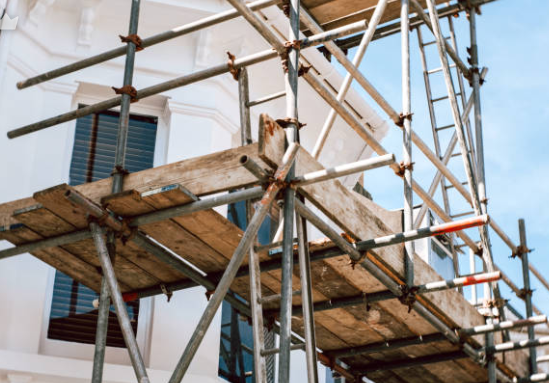
Best uses: heavy-duty scaffolds, long-term projects, high-load applications, tube and clamp systems.
2. Aluminium
Aluminium scaffolds are lightweight yet strong. Consequently, workers can handle them manually, which speeds up erection. Moreover, aluminium resists corrosion, so it suits outdoor and damp conditions.
In addition, aluminium suits mobile towers and applications where weight matters. Furthermore, it requires less lifting equipment than steel.
However, aluminium costs more than steel. In addition, it deflects more under load, and it cannot be welded on site. Therefore, technicians must avoid overloading aluminium scaffolds.
Best uses: mobile towers, light-duty scaffolds, interior work, rapid erection.
3. Timber
Timber was the first material used for scaffolding. Today, timber scaffolds serve specific applications, particularly in masonry work.
Scaffold-grade lumber must meet strict grading rules. It must have at least six rings per inch, limited grain slope, and few defects. Moreover, construction-grade lumber has only two-thirds the capacity of scaffold-grade lumber, so it must never substitute for it.
Timber is cheap, easy to cut, and readily available. Moreover, it does not rust and it resists impact well. However, timber is vulnerable to fire, rot, and insect attack. In addition, it varies in strength, so grading is essential.
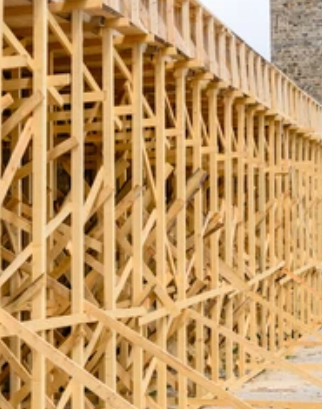
Best uses: masonry scaffolds, traditional putlog scaffolds, short-term work, repair jobs.
4. Bamboo
Bamboo scaffolds are common in parts of Asia and Africa. Bamboo is light, cheap, and widely available. Moreover, it offers good strength-to-weight ratio when selected and lashed correctly.
However, bamboo varies greatly in strength. In addition, it requires skilled workers to lash joints properly. Therefore, bamboo suits low-rise, short-term scaffolds rather than heavy-duty work.
Best uses: low-rise scaffolds, short-term work, regions where bamboo is abundant.
5. Plywood and Wood-Based Panels
Plywood and wood-based panels serve as platform decks. They provide a flat, continuous working surface. Moreover, plywood for scaffold decks must meet specific standards for strength and moisture resistance.
In addition, fabricated planks and platforms use manufacturer-rated load capacities. These ratings include light-duty, medium-duty, and heavy-duty.
Best uses: platform decks, toe boards, guard rails, formwork surfaces.
6. Aluminium Alloy Ladders and Stair Towers
Aluminium alloy ladders and stair towers provide safe access to platforms. They are light, strong, and corrosion-resistant. Therefore, they suit both steel and aluminium scaffolds.
Best uses: access ladders, stair towers, mobile access units.
7. Plastic and Composite Materials
Plastic and composite materials appear in modern scaffold accessories. For instance, plastic toe boards, coupler covers, and base pads resist corrosion and reduce weight.
Moreover, composite platforms offer high strength with low weight. However, they cost more than traditional materials, so technicians use them selectively.
Best uses: accessories, lightweight platforms, corrosive environments.
8. Cast Iron and Malleable Iron
Cast iron and malleable iron appear in some scaffold fittings and couplers. However, modern scaffolds rarely use them, because steel and aluminium dominate.
Best uses: older scaffold systems, specialised fittings.
Scaffold Material Comparison
The table below compares the main scaffold materials across key properties.
| Material | Strength | Weight | Corrosion Resistance | Cost | Best Use |
| Steel | High | Heavy | Low (needs coating) | Medium | Heavy-duty scaffolds |
| Aluminium | Medium | Light | High | High | Mobile towers, light duty |
| Timber | Medium | Medium | Good (if treated) | Low | Masonry, short-term work |
| Bamboo | Low–Medium | Light | Moderate | Low | Low-rise, short-term work |
| Plywood | Medium | Light | Moderate | Medium | Platform decks |
| Plastic/Composite | Medium | Light | High | High | Accessories, corrosive sites |
Platform Materials
Platforms are arguably the most critical scaffold component. In fact, more scaffold incidents involve planking giving way than any other cause. Therefore, technicians must select platform materials carefully.
Wood Planks
Wood planks must be scaffold-grade, identified by a grade stamp from a recognised lumber grading association. Moreover, planks with splits more than a few inches long must be removed from service.
In addition, planks with checks (surface cracks) should be watched, because they may develop into splits. Furthermore, planks that have accumulated layers of paint or plaster must not remain in service, because dangerous splits may hide underneath.
Fabricated Planks and Decks
Fabricated planks and platforms use manufacturer-rated load capacities. These ratings include light-duty (25 lbs/ft²), medium-duty (50 lbs/ft²), and heavy-duty (75 lbs/ft²). Therefore, technicians must match the platform rating to the task.
Metal Decking
Metal decking offers strength, durability, and fire resistance. Moreover, it provides a uniform surface with few joints. Consequently, it suits heavy-duty and long-term scaffolds.
Factors That Influence Material Choice
Several factors influence which material a technician selects. Therefore, consider each one before deciding.
Load Requirements
Heavy loads demand steel or heavy-duty fabricated decks. In contrast, light tasks suit aluminium or timber.
Height and Duration
Tall scaffolds and long-duration projects favour steel, because it is durable and strong. Short-term, low-rise work suits timber or bamboo.
Site Conditions
Corrosive environments favour aluminium, plastic, or treated timber. Moreover, damp sites require corrosion-resistant materials and good storage.
Transport and Handling
Sites with limited access favour lightweight materials such as aluminium. In contrast, sites with lifting equipment can use steel.
Availability and Cost
Local availability affects cost and programme. Therefore, technicians should choose materials that are readily obtainable and affordable over the project life.
Regulatory Requirements
Standards and regulations may specify material grades and testing. Therefore, technicians must confirm compliance before use.
Material Standards and Testing
Scaffold materials must meet recognised standards. Therefore, technicians should verify compliance before accepting materials.
- Steel tubes – must meet dimensional and strength standards.
- Couplers – must pass slip and tensile tests.
- Timber – must carry a scaffold-grade stamp.
- Platform decks – must carry a manufacturer’s load rating.
- Aluminium – must meet alloy and temper specifications.
In addition, materials should be inspected on delivery and at regular intervals. Consequently, defective items never reach the scaffold.
Storage and Maintenance by Material
Different materials need different storage and maintenance. Therefore, follow the guidance below.
| Material | Storage Requirement | Maintenance |
| Steel | Under cover, on bearers | Oil threads, repair coatings |
| Aluminium | Under cover, stack flat | Clean, avoid impact |
| Timber | Under cover, stacked with stickers | Treat against rot and insects |
| Bamboo | Under cover, kept dry | Inspect for splits and insects |
| Plywood | Flat on bearers, covered | Seal edges, keep dry |
| Plastic/Composite | Away from sunlight, flat | Clean, inspect for cracks |
Common Mistakes with Scaffold Materials
Many scaffold failures begin with poor material choices. Therefore, avoid the following common mistakes.
- Using construction-grade lumber instead of scaffold-grade lumber.
- Mixing components from different systems.
- Using corroded or bent steel tubes.
- Overloading aluminium scaffolds.
- Leaving timber and plywood exposed to rain.
- Using planks with hidden splits.
- Ignoring manufacturer load ratings.
- Failing to inspect materials on delivery.
- Storing materials on bare ground.
- Reusing damaged components.
Conclusion
Scaffold materials determine the strength, safety, and economy of every scaffold. When technicians select the right material for the task, inspect it carefully, and store it properly, scaffolds perform reliably and last longer.
Moreover, each material has strengths and limitations. Therefore, technicians must match the material to the load, height, duration, and site conditions. As a result, scaffolds protect workers, support efficient construction, and reduce long-term costs.
Frequently Asked Questions
What is the most common scaffold material?
Steel is the most common scaffold material. It offers high strength, durability, and standardised components, which suit heavy-duty and long-term projects.
Why is aluminium used for mobile towers?
Aluminium is lightweight yet strong. Therefore, workers can move and erect mobile towers manually, which speeds up work and reduces lifting needs.
What is scaffold-grade lumber?
Scaffold-grade lumber is wood that meets strict grading rules for strength. It has at least six rings per inch and limited defects. Construction-grade lumber has only two-thirds the capacity and must not substitute for it.
Why do scaffold planks fail?
Planks fail because of hidden splits, checks that develop into splits, or accumulated paint and plaster that hide damage. Therefore, inspect planks regularly and remove defective ones.
How should scaffold materials be stored?
Store materials under cover, raised off the ground on bearers. Moreover, keep steel oiled, timber treated, and plywood flat and dry. Consequently, materials remain serviceable for the next project.