
Introduction:
How Foundation Mistakes Lead to Structural Failure
The foundation is the literal bedrock of any structure, and errors made during its construction are among the most costly and dangerous in the building industry. Foundation mistakes that cause structural failure often go unnoticed for years, silently compromising a building’s integrity until signs like severe cracking, sticking doors, or sloping floors become impossible to ignore. These are not simple cosmetic issues but the direct result of flawed engineering, poor site preparation, and substandard materials. This guide details the seven most critical structural foundation failures that can jeopardise an entire building, explaining their causes, consequences, and, most importantly, how to prevent them through rigors planning and execution.
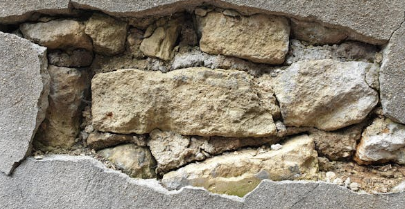
Major foundation crack caused by critical structural foundation mistakes.
1. The Unstable Base: Building on Improperly Prepared Soil
This is the single most common and devastating foundation construction error.
- The Critical Mistake: Pouring a foundation on top of uncompacted fill soil, organic topsoil, or expansive clay without proper testing and preparation.
- How It Causes Failure: The soil compresses unevenly under the weight of the structure, a process known as differential settlement. This places extreme stress on the foundation, causing it to crack, tilt, or sink. The resulting movement fractures the entire building above.
- Prevention Strategy: A professional geotechnical survey is non-negotiable. All fill must be placed and mechanically compacted in controlled “lifts”. Foundations for homes on expansive clay often require specialised deep piers or drilled shafts.
2. The Water War: Inadequate Drainage and Waterproofing
Water is the arch-nemesis of every foundation, and losing this battle guarantees long-term structural damage.
- The Critical Mistake: Failing to install proper perimeter drain tile (French drain), using a weak or torn waterproofing membrane, or backfilling with material that blocks drainage.
- How It Causes Failure: Hydrostatic pressure builds up against the foundation walls, leading to water intrusion, cracking, and, in frost-prone areas, frost heave that can lift and shatter concrete. Over time, this erodes soil support and leads to bowing or collapsing walls.
- Prevention Strategy: Install a perforated drainpipe at the footing level, covered in gravel and draining to daylight or a sump pump. Use a high-quality membrane protected by a dimpled drainage board. For more, see our guide on designing a dry foundation system.
3. The Concrete Catastrophe: Poor Mix, Placement, and Curing
A foundation is only as strong as the concrete it’s made of.
- The Critical Mistake: Using a concrete mix with a high water-to-cement ratio (weakening it), improper vibration during pouring (leaving voids or “honeycombs”), and failing to cure the concrete slowly and evenly.
- How It Causes Failure: Weak concrete is prone to cracking and spalling. Voids create critical weak points. Rapid drying (plastic shrinkage) causes surface cracks that can deepen. This creates a brittle foundation unable to handle soil pressures.
- Prevention Strategy: Use a low-slump, air-entrained mix specified by the engineer. Cure concrete for a minimum of 7 days using wet coverings or curing compounds. The American Concrete Institute (ACI) provides essential standards for concrete practice.
4. The Reinforcement Ruin: Incorrect or Missing Rebar
Concrete handles compression well but is weak in tension. Steel rebar provides its tensile strength.
- The Critical Mistake: Using undersized rebar, incorrect spacing, improper placement (especially at corners and beam intersections), or insufficient concrete cover leading to corrosion.
- How It Causes Failure: Without proper reinforcement, foundation walls and footings can’t resist the bending forces exerted by soil and water pressure. They will crack and fail in tension. Corroding rebar expands, cracking the concrete from within.
- Prevention Strategy: Meticulously follow the structural engineer’s rebar schedule. Use bar chairs and spacers to ensure proper positioning and concrete cover. Inspect the rebar cage before the pour.
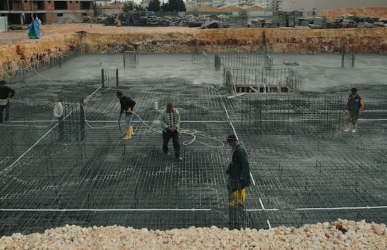
Proper rebar detailing to prevent foundational errors and structural failure.
5. The Footing Fiasco: Undersized or Shallow Footings
The footing distributes the building’s load to the soil; if it’s wrong, everything above is at risk.
- The Critical Mistake: Footings that are too narrow or not thick enough for the soil’s bearing capacity, or placed above the frost line in cold climates.
- How It Causes Failure: An undersized footing can sink or shear. A shallow footing will heave upwards when the ground freezes, cracking the foundation and lifting the structure unevenly. This is a primary cause of frost heave damage.
- Prevention Strategy: Footing dimensions and depth must be calculated by a structural engineer based on the geotechnical report and local frost depth requirements. Never guess.
6. The Backfill Blunder: Premature or Improper Backfilling
The ground pushed against the foundation must be as carefully considered as the foundation itself.
- The Critical Mistake: Backfilling against foundation walls before the first-floor framing is in place to brace them, or using large, jagged rocks and debris in the backfill that can damage waterproofing and create voids.
- How It Causes Failure: Wet, heavy soil pressing against an unbraced wall can push it inward, causing bowing or cracking. Debris-laden backfill prevents proper drainage, leading to water buildup and pressure.
- Prevention Strategy: Backfill only after the first-floor deck is secured. Use clean, granular, drainable backfill material. Place and compact it in layers away from the wall.
7. The Design Disregard: Ignoring Expansive Soils and Seismic Forces
A generic foundation design is a recipe for failure on challenging sites.
- The Critical Mistake: Using a standard slab-on-grade or shallow footing design on highly expansive clay soils or in active seismic zones without specialised engineering.
- How It Causes Failure: Expansive soils swell massively when wet, lifting sections of the foundation with enough force to crack slabs and rupture walls. In earthquakes, a rigid foundation can transfer destructive forces directly into the structure.
- Prevention Strategy: On expansive soils, engineers may prescribe drilled pier foundations or post-tensioned slabs. In seismic zones, foundations must be designed with specific reinforcing to flex and absorb energy.
Conclusion: Building on a Legacy of Stability
The foundation mistakes that cause structural failure are a stark lesson in the non-negotiable principles of soil mechanics, material science, and precise engineering. There is no room for shortcuts or assumptions. Preventing these catastrophic errors requires a commitment to expert-led site evaluation, meticulous material and craft standards, and a deep respect for the environmental forces at play. By investing in a flawless foundation, the one part of a building you truly never want to see again, you secure the safety, value, and longevity of everything built upon it.