
Introduction: The Peril of Skipping a Geotechnical Investigation
Before a single foundation is poured, one of the most critical steps in construction is often overlooked: the soil test. The decision to proceed building without soil testing is dangerous and represents a fundamental gamble with a building’s long-term stability and safety. This act of building on an unknown base, ignoring the soil’s composition, bearing capacity, and behaviour, directly leads to some of the most expensive and catastrophic failures in construction. This guide explains the severe risks of bypassing a geotechnical report, detailing how unseen soil conditions can silently undermine a structure, causing everything from persistent cracks to complete structural collapse. Understanding these dangers is essential for any responsible builder, developer, or homeowner.
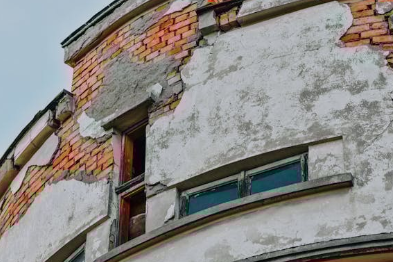
Structural damage likely caused by building without proper soil testing and investigation.
1. The Unseen Instability: Building on Uncompacted Fill or Peat
You cannot build a stable structure on a spongy, shifting base.
- The Danger: Without testing, you may build on uncompacted construction fill, organic peat, or loose topsoil that cannot support a building’s weight.
- The Consequence: Catastrophic differential settlement occurs, where parts of the foundation sink dramatically faster than others. This leads to severe cracking in foundations and walls, sticking doors and windows, and in extreme cases, partial structural collapse. This is the primary risk of constructing without a soil analysis.
- The Solution: A geotechnical engineer identifies poor soil and prescribes removal, compaction, or deep foundation solutions before design begins.
2. The Expansive Soil Trap: The Silent Force That Lifts Your Home
Certain clays expand like a sponge when wet and shrink when dry, exerting immense pressure.
- The Danger: Building on expansive clay without knowing its Plasticity Index (a measure of expansion potential) and without a specialised foundation design.
- The Consequence: Seasonal moisture changes cause the soil to swell, lifting sections of the foundation with enough force to crack slabs, shear grade beams, and fracture walls. This expansive soil damage results in a cycle of recurring, costly repairs. This clearly demonstrates why skipping soil analysis is risky.
- The Solution: Soil testing quantifies expansion potential. Engineers can then design resistant foundations, such as drilled piers or post-tensioned slabs, that anchor below the active zone.
3. The Bearing Capacity Blunder: When the Ground Just Gives Way
The soil must be strong enough to hold the building up. Guessing its strength is negligent.
- The Danger: Assuming the soil has adequate bearing capacity and designing standard footings that are too small for the actual weak soil.
- The Consequence: The footings punch through or sink uniformly into the weak soil, leading to overall settlement. While more uniform than differential settlement, it can still cause significant structural distress, utility line breaks, and grading issues.
- The Solution: Soil testing provides the allowable bearing capacity (in pounds per square foot), allowing the structural engineer to correctly size footings, mats, or piles.
4. The High Water Table Hazard: Buoyancy and Constant Moisture
Water in the ground is a powerful force that must be engineered against.
- The Danger: Unknowingly building with a basement or deep foundation in a high water table area without proper waterproofing and drainage design.
- The Consequence: Hydrostatic pressure can cause basement floors to crack and heave upward. Constant water pressure challenges even good waterproofing, leading to chronic leaks, mould, and corrosion of structural elements. A high water table is a critical factor that makes building without soil investigation dangerous. Our guide on basement waterproofing in high-risk areas covers this in depth.
- The Solution: Soil borings determine the seasonal high water table. This informs the need for sump pumps, perimeter drains, and possibly even a buoyancy (flotation) calculation for the foundation.
5. The Contamination Crisis: Building on Polluted Ground
The ground isn’t just dirt; it can be a legal and health liability.
- The Danger: Building on a former industrial site, gas station, or landfill without a Phase I Environmental Site Assessment (ESA) and subsequent soil testing.
- The Consequence: Discovering soil or groundwater contamination after construction can trigger mandatory, astronomically expensive cleanup under laws like CERCLA (Superfund). It also poses direct health risks to occupants and can render a property worthless. This is a profound financial and legal peril of neglecting pre-construction soil tests.
- The Solution: Always conduct environmental due diligence on non-virgin land. The EPA’s guidelines on land reuse highlight the importance of this step.
6. The Slope Stability Slide: Ignoring the Risk of Movement
Building on or near a slope requires precise understanding of the soil’s shear strength.
- The Danger: Excavating into a hillside or building on a slope without analysing the soil’s angle of repose and stability.
- The Consequence: Landslides or slope creep. The hillside can slowly slide, shearing off foundations, or catastrophically fail, taking the structure with it. This is perhaps the most dramatic and deadly result of the dangers of no soil test.
- The Solution: Geotechnical engineers perform slope stability analysis and prescribe retaining walls, proper drainage, and foundation types that anchor the structure to stable earth.
7. The Frost Heave Freeze: Forgetting the Power of Ice
In cold climates, frozen water in the soil is a destructive lifting force.
- The Danger: Placing footings above the local frost depth without verifying soil drainage characteristics.
- The Consequence: Water in the soil freezes and expands, lifting footings unevenly. When it thaws, the soil settles, often not back to its original position. This annual cycle, called frost heave, progressively cracks and distorts foundations.
- The Solution: Soil testing helps determine drainage and frost susceptibility. Building codes mandate footing depth, but a geotechnical report ensures the design is adequate for the specific site conditions.
Conclusion: Soil Testing is Non-Negotiable Due Diligence
The question of why building without soil testing is dangerous has a clear and unequivocal answer: it is building blind. The soil is not a passive bystander; it is an active participant in the structural system. Skipping a geotechnical investigation to save a few thousand dollars is the ultimate false economy, risking repairs that can cost tens or even hundreds of thousands. It is the first and most critical investment in a project’s longevity, safety, and value. A soil test provides the foundational truth upon which every other design and construction decision must be built. In construction, what you don’t know can and will hurt your building.